[1]Judicial reasoning intelligence

How recent judgments have treated the arguments you are about to run.

Litigation Reasoning Lab produces bespoke, human-checked reports analysing judicial reasoning patterns and argument treatment across recent case law — structured around judgment analysis and supported throughout by paragraph references.

Built for UK commercial litigators, Chancery practitioners and the Business and Property Courts. Research support for legal professionals — not legal advice, and not outcome prediction.

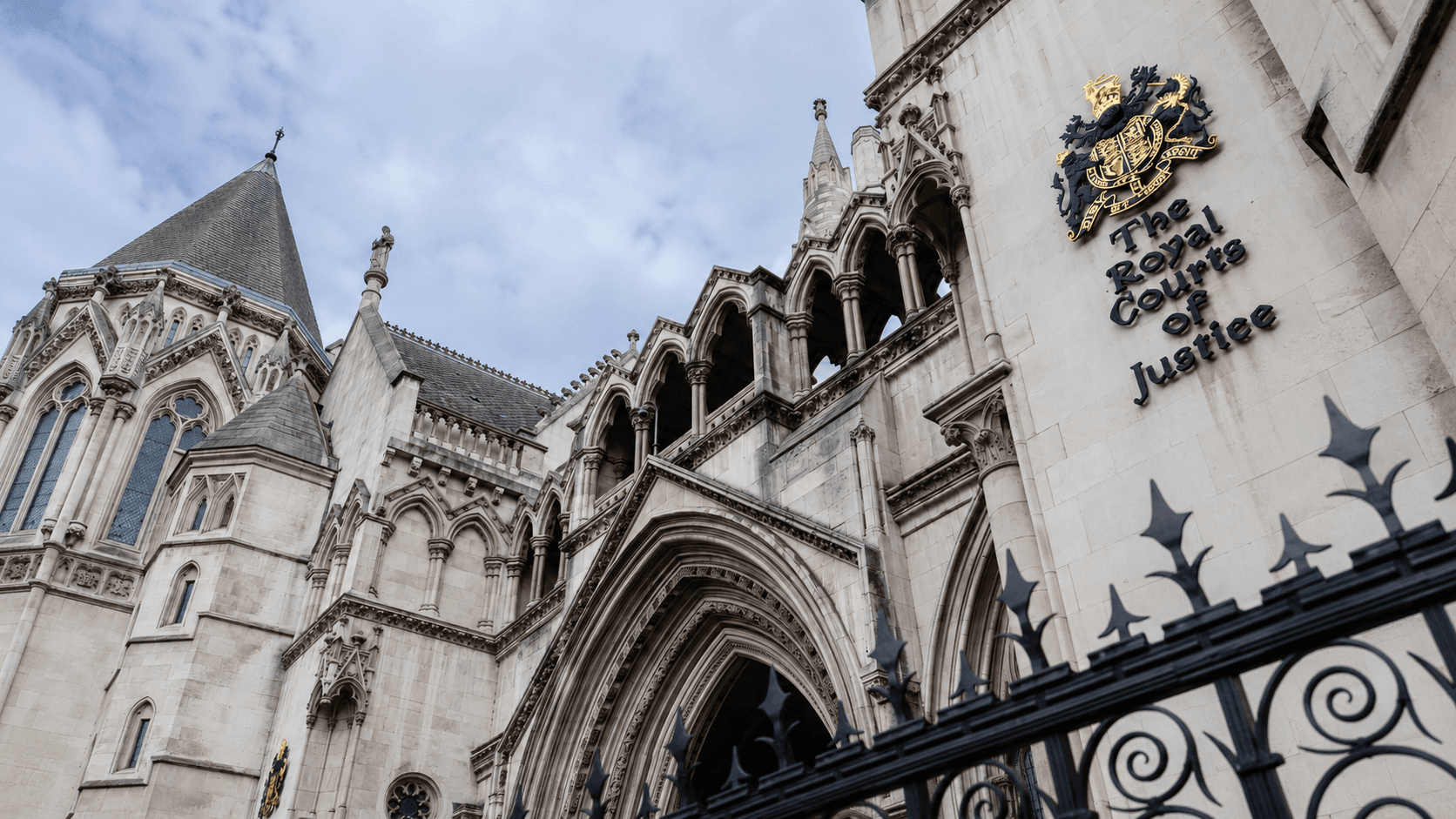
The Royal Courts of Justice

The patterns are in the judgments. We read them so you can use them.

[2]The gap

You know the authorities. How they’re being applied takes longer.

Litigation teams in corporate and shareholder disputes usually know the leading authorities. What’s harder to do under time pressure is systematically analyse how those authorities are actually being applied in recent judgments — where a dispute turns on familiar but fact-sensitive arguments like unfair prejudice, shareholder exclusion, dilution, lock-in, breach of a shareholders’ agreement, valuation, procedural route or interim relief.

That analysis lives in the judgments themselves. Surfacing it means reading recent decisions at paragraph level, distinguishing where an argument succeeded, failed, or succeeded only in principle, and noting whether failure was doctrinal, evidential, procedural or remedial. We do that work and set it out so a litigation team can use it.

Extract · Judicial Reasoning Profile

Issue 3 — Exclusion from management

Across the sampled judgments, exclusion arguments were treated most favourably where an informal understanding as to participation was properly evidenced. Bare exclusion, without that foundation, was repeatedly described as prejudicial but not unfair [41]–[48], [63]; the remedial consequences differed accordingly [102].
Cited to judgment paragraphsHuman-reviewed

Illustrative extract. Findings in delivered reports are case-specific and fully sourced.

[3]Pilot services

Two report formats, both grounded in case law.

Service one

Judicial Reasoning Profiles

A bespoke report analysing how a selected judge has treated recurring legal issues within a defined area, drawn from their recent judgments.

Example: how a Business and Property Courts judge has approached shareholder disputes — unfair prejudice petitions, rectification, shareholder agreements, schemes of arrangement, procedural fairness, valuation and remedies.

  • Issue-by-issue treatment
  • Procedural and case-management posture
  • Remedy and valuation patterns

Service two

Argument Treatment Trackers

A bespoke report analysing how a particular legal argument has been treated across recent cases, court by court and judgment by judgment.

Example: how courts have treated unfair prejudice arguments based on exclusion, lock-in, dividend discrimination, asset extraction, conflicts of interest, procedural unfairness or misuse of corporate control.

  • Argument formulations that gained traction
  • Evidential foundations the court looked for
  • Outcome and remedy mapping

Every report is grounded in case law, structured around judgment analysis, supported by paragraph references, and reviewed by a human analyst before delivery. Reports support litigation preparation by qualified professionals; they do not replace legal advice.

[4]Where it earns its place

Commissioned when the reading list is long and the fixture is fixed.

  • Hearing preparation

    Preparing for a hearing before a known judge, with a structured view of how they have approached comparable issues.

  • Argument testing

    Testing how a specific argument has fared in recent case law before committing it to pleadings or skeleton.

  • Remedy analysis

    Understanding remedial patterns in unfair prejudice petitions — buy-out terms, valuation dates, discounts and conduct adjustments.

  • Procedural risk

    Identifying procedural risks in urgent interim applications, where recent treatment of comparable applications is instructive.

  • Knowledge building

    Building internal know-how for a litigation team in a recurring practice area, in a citable and reusable form.

[5]Method

A documented method, the same every time.

Each report follows the same disciplined sequence, so findings are consistent, checkable and traceable back to the judgments.

  1. Define the issue

    We agree a precise research question with you — the judge, court or argument, the area of law, and the period of judgments in scope.

  2. Identify relevant judgments

    We assemble the judgment set from lawful, citable case-law sources, recording what is included and why.

  3. Code arguments and outcomes

    Each judgment is read and coded: the arguments run, the evidential foundation, the procedural route, the outcome and the remedy.

  4. Analyse reasoning patterns

    We compare treatment across the set — where formulations gained traction, where they failed, and what distinguished the two.

  5. Produce a human-checked report

    Findings are written up issue by issue, every proposition supported by paragraph references, and reviewed by a human analyst before delivery.

AI-assisted tools may be used to accelerate extraction and comparison, but all reports are legally reviewed and human-checked before delivery.

[6]Responsible use

What this service is — and what it is not.

We do not predict judicial outcomes, and we do not offer judge prediction. No analysis of past judgments can tell you how a court will decide your case: every decision depends on its facts, the evidence, the procedural context, binding authority, the quality of advocacy and the remedy sought.

What systematic judgment analysis can responsibly provide is a clear, source-grounded account of reasoning patterns and argument treatment in decided cases — and with it, a better-informed view of litigation and procedural risk. Our reports are research instruments for qualified professionals to weigh alongside their own judgement, not a substitute for it.

Pattern, not prophecy. Every finding traceable to the paragraph that supports it.

[7]Pilot coverage

Initial focus areas.

The pilot concentrates on company and Chancery work, where reasoning patterns recur and the judgment base is deep. Adjacent areas are considered on enquiry.

  • Company law
  • Shareholder disputes
  • Unfair prejudice petitions
  • Corporate finance and shareholder rights
  • Chancery litigation
  • Business and Property Courts
  • Commercial disputes
  • Insolvency-adjacent shareholder issues

[8]Sample insight

The kind of finding a report surfaces.

In a recent shareholder dispute, the court accepted that failing to pay dividends in line with constitutional entitlements can be unfairly prejudicial — but still examined the company’s informal history, the parties’ understanding, the remuneration context and the petitioner’s own knowledge before granting relief. The distinction that mattered was not whether there had been a breach, but whether the breach was unfair in context.

Illustrative of the prejudice / unfair-prejudice distinction in recent s.994 decisions. Delivered reports identify the specific judgments and paragraph references behind each finding.

[9]Sample work

See the analysis before you commission it.

Our one-page sample insight shows how structured judgment analysis reads in practice — the prejudice / unfair-prejudice distinction drawn from recent shareholder decisions. It’s free to read. A fuller worked report, including the dataset, coding method, paragraph bank and argument-risk analysis, is available on request to legal professionals.

Read the sample insight

[10]Pilot enquiry

Commission a pilot report.

Tell us the judge, court or argument you are working on and the deadline you are working to. We will respond with a scope, a fixed fee and a delivery date — usually within one working day.

Requesting the full sample report? Mention it below and we’ll send it across.

Direct enquiries

enquiries@litigationreasoninglab.co.uk

Enquiries are treated as confidential. Pilot reports are available to law firms, chambers and in-house legal teams.

No privileged or confidential client detail is needed at this stage.

Disclaimer

Litigation Reasoning Lab provides legal research support to qualified legal professionals. It does not provide legal advice to the public, does not conduct litigation or reserved legal activities, and does not predict judicial outcomes. Reports analyse reasoning in decided cases as published in lawful case-law sources; they are intended to inform — not replace — the professional judgement of instructed lawyers. Past treatment of an argument is not a guarantee of future treatment.